
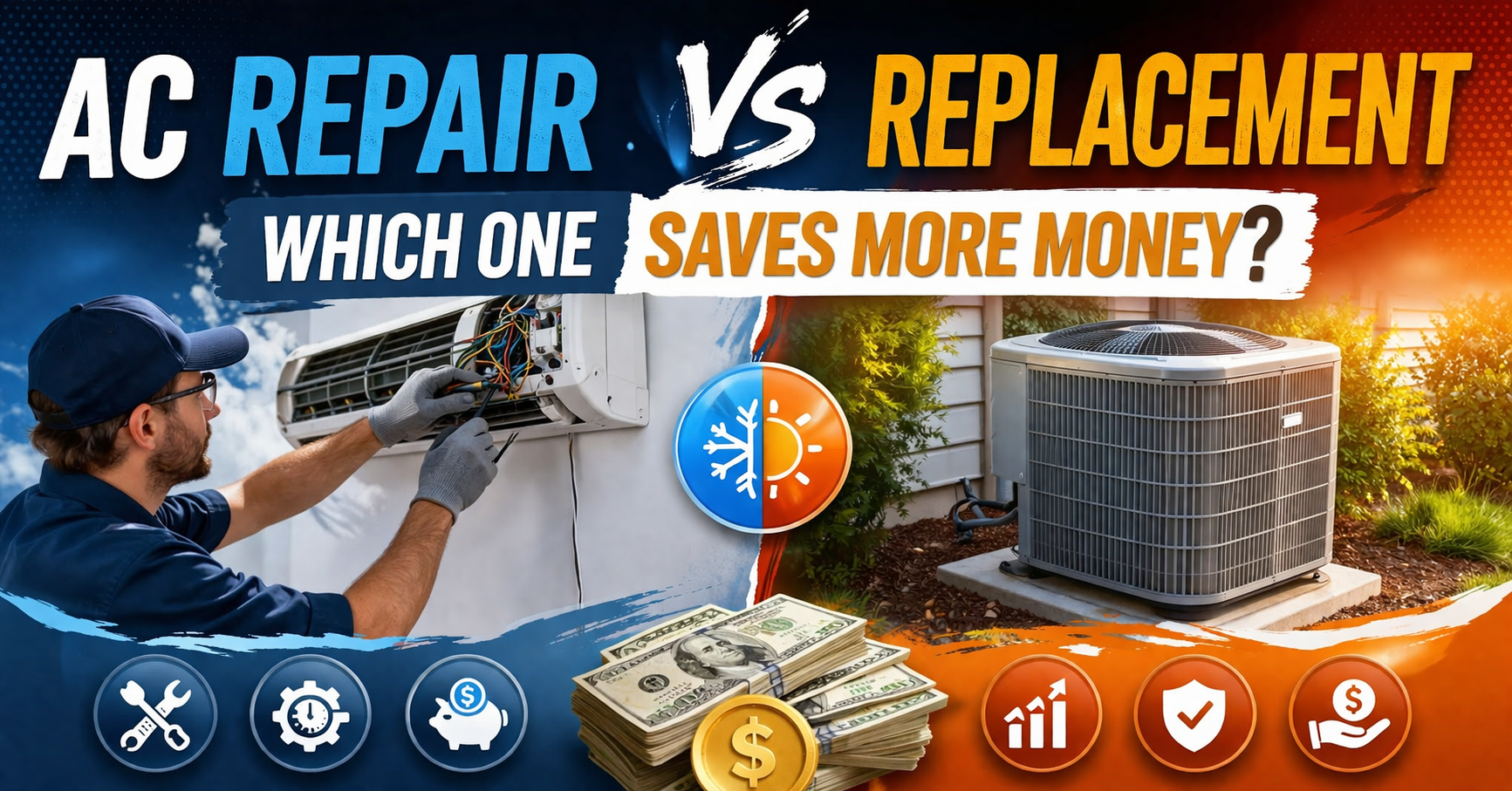

AC not working can make homes super-hot, and bills go up fast. Choosing between fixing it or getting a new one depends on age, cost, and how well it cools. Small repairs are cheaper now, but old ACs may keep breaking and waste electricity. New units use less power and save money over time. Picking smart keeps homes comfy and bills low. Getting advice from an HVAC repair can also prevent bigger problems later.
Quick Answer: Repair Or Replace?
Deciding on repair or replacement keeps comfort and money safe. Fixing is cheaper now, but a new system saves energy later. Old ACs cost more to keep fixing.
- Repair saves money short-term
- Replacement saves money long-term
- Older units break more often
- New ACs run better and last longer
Understanding AC Repair
Repair means fixing one part to make the AC work again. It’s great for small problems and is usually fast.
When Repair Makes Sense
If your AC is still young and works well most of the time, repairing a small problem can save money.
- AC is under 8–10 years old
- Problems are small, like filters or motors
- The repair cost is low
- Cooling is still strong
- Quick fix without big investment
Benefits of Repair
- Low upfront cost
- Fast solution
- Less hassle
- Keeps the system running
- Temporary comfort until replacement
Downsides of Repair
- Problems may come back
- Old parts may fail again
- Energy bills may stay high
- Comfort may not be perfect
- Only a short-term solution
Repair is like patching a bike tire. It works, but won’t last forever.
Understanding AC Replacement
Replacement means installing a brand-new AC system. It costs more now but saves energy and money later.
When Replacement Makes Sense
Replacing is smart when the AC is old or keeps breaking. It helps save long-term bills.
- AC is older than 10 years
- Repairs happen often
- Energy bills keep rising
- Cooling feels uneven
The system struggles to keep the home comfy
Benefits of Replacement
- Lower monthly energy bills
- Better cooling and comfort
- Fewer repairs
- Modern features like smart thermostats
- Lasts longer
Downsides of Replacement
- Higher upfront cost
- Installation takes time
- Needs planning
- The old AC must be removed
Replacement is like getting a new car. Costs more now, but it runs better for years.
Cost Comparison
Here’s a fun, easy table to see repair vs replacement in simple words.
| Factor | Repair | Replacement |
|---|---|---|
| Upfront Cost | Low (Lower initial investment) | High (Large initial investment) |
| Long-Term Savings | Low (Higher utility and maintenance costs) | High (Significant energy/repair savings) |
| Energy Efficiency | Okay (Existing efficiency stays the same) | Very Good (Modern, high-efficiency tech) |
| Lifespan | Short (Provides a temporary extension) | Long (10–15+ years of service) |
| Repair Frequency | Likely (Issues may recur as parts age) | Very Low (New units under warranty) |
The 50 Percent Rule
Here’s a trick to make the choice easy. If repair costs more than half the price of a new AC, replacement usually wins.
- Compare repair estimate vs new AC cost
- Is the AC older than 10 years? Replacement likely better
- Saves money on energy and future repairs
- Avoids constant breakdowns
- Makes the decision simpler
This rule helps you pick smart and avoid wasting money.
Hidden Costs People Forget
Repair can seem cheap, but hidden costs often sneak up. These costs make “repair” more expensive than it looks.
- Energy bills rise over time
- Frequent service calls
- Uneven cooling in rooms
- Sudden breakdowns
- Lost comfort and stress
New AC units prevent these problems and give steady cooling without surprise costs.
Energy Efficiency Matters
Old ACs need more electricity to cool rooms. New units run efficiently, save power, and lower bills.
- Use less electricity
- Cool rooms faster
- Maintain a steady temperature
- Reduce monthly bills
- Last longer with less wear
Energy efficiency is a huge reason new ACs save money over time.
Comfort And Air Quality
Comfort matters as much as money. Old systems may cool unevenly and blow dust. New systems improve comfort and make homes healthier.
- Even cooling in all rooms
- Less dust and allergens
- Quiet operation
- Control humidity better
- Better for health
Better air quality and comfort make a new system worth the investment.
Environmental Impact
Old ACs are bad for the environment. They use old refrigerants and more energy. New systems are eco-friendly and save money, too.
- Use safe refrigerants
- Use less power
- Reduce carbon footprint
- Lower bills
- Cleaner, healthier air
Replacing old ACs is good for both your wallet and the planet.
Signs You Should Repair
Repair works best when the AC is still strong and problems are small.
- AC still cools rooms well
- Only minor issues, like noise or small leaks
- The unit is fairly new
- Repairs are cheaper than a new AC
- Short-term comfort is okay
Signs You Should Replace
Replacement is smarter when the AC struggles often and bills rise.
- Breaks often
- Energy bills keep going up
- Cooling is weak or uneven
- AC is over 10 years old
- Frequent repairs cost too much
Replacement saves money in the long run and keeps homes comfy.
Real-Life Example
Think of AC like a phone:
- Screen cracks once? Repair works
- Phone slows down, battery dies? The new phone is better
- AC is similar: small repairs work for young units
- Old units need constant fixing
This makes repair vs replacement easy to understand.
Smart Tips Before Deciding
Planning prevents wasted money. Think about long-term costs, not just now.
- Check the repair cost carefully
- Consider the age and condition of the unit
- Compare energy bills before and after repair
- Ask for expert advice
- Decide based on comfort and cost
Smart planning saves money and stress later.
FAQs
Q. Is it cheaper to repair or replace an AC?
A. Repair costs less at first, but replacement saves money long-term. Older units with frequent problems cost more to keep fixing. New ACs use less energy and last longer.
Q. How long do AC units last?
A. Most ACs last 10–15 years. Proper maintenance helps them last longer. Older units lose efficiency and need repairs more often, making replacement the better choice.
Q. What is the 50 percent rule?
A. If repair costs more than half of a new AC price, replacement is smarter. It prevents wasting money on repeated fixes and high energy bills.
Q. Does a new AC really save money?
A. Yes! New ACs use less electricity, run efficiently, and reduce repair costs. They keep rooms cool and comfortable, making the higher upfront cost worth it.
Q. How do I know if my AC needs replacement?
A. Frequent breakdowns, high energy bills, uneven cooling, and old age are key signs. If the AC struggles to maintain comfort, replacement is the better, cost-saving choice.
Make the Smart Choice Today
Confused about repair or replacement? Experts can help. The Honest Heating Company gives honest advice, fast service, and reliable solutions. Book now for better cooling, lower bills, and happy, comfy homes.
Leave a Reply